


Where Are Platform Laser Welding Machines Used?
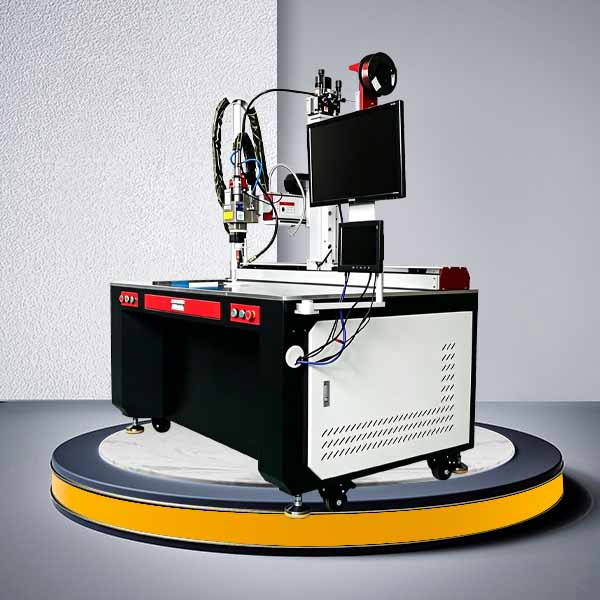
Platform laser welding machines are used across a wide range of manufacturing industries where precise, consistent, and efficient metal joining is required. By combining a focused laser beam with a stable work platform and controlled welding parameters, these machines can produce clean welds with relatively low thermal distortion.
Unlike handheld laser welding systems, platform machines are particularly suitable for repeatable production, precision components, batch processing, and applications that require controlled positioning. Their flexibility makes them valuable for manufacturers working with stainless steel, carbon steel, aluminum, galvanized steel, copper, and other metal materials.
1. Sheet Metal Fabrication
One of the most common applications for platform laser welding machines is sheet metal fabrication.
Manufacturers use these systems to weld:
Metal cabinets
Electrical enclosures
Machine housings
Sheet metal frames
Brackets
Covers
Stainless steel structures
Custom fabricated components
Laser welding provides concentrated heat input, which helps reduce deformation when joining relatively thin metal sheets. This is particularly important for products that require accurate dimensions and clean external surfaces.
For manufacturers producing multiple identical components, a platform system can also store welding parameters and follow programmed welding paths, improving consistency between production batches.
2. Stainless Steel Products
Stainless steel is widely used in commercial, industrial, and consumer products because of its corrosion resistance and attractive appearance. Platform laser welding machines are well suited to stainless steel because they can create narrow and precise weld seams.
Common applications include:
Stainless steel cabinets
Kitchen equipment
Sinks
Food-processing equipment
Metal furniture
Railings
Decorative metal products
Medical equipment housings
For visible products, weld appearance is often an important consideration. Properly controlled laser welding can minimize excessive spatter and reduce the amount of grinding and polishing required after welding.
3. Automotive Manufacturing
The automotive industry requires high production efficiency and consistent welding quality. Platform laser welding machines can be used for various automotive components and metal assemblies.
Potential applications include:
Automotive brackets
Exhaust components
Sheet metal assemblies
Battery-related components
Structural parts
Small precision components
Interior metal components
Laser welding is particularly attractive when manufacturers need accurate weld positioning and repeatable results across large numbers of components.
For automated automotive production lines, platform laser welding technology can also be integrated with robotic or CNC-controlled systems.
4. Electrical Cabinets and Enclosures
Electrical and industrial equipment manufacturers frequently produce metal enclosures that require accurate joints and clean surfaces.
Platform laser welding machines can weld the seams of:
Electrical cabinets
Control boxes
Distribution enclosures
Server cabinets
Instrument housings
Industrial control panels
Because these products often use thin or medium-thickness sheet metal, controlling heat input is important. Excessive heat can cause distortion and make subsequent assembly more difficult.
Laser welding provides a concentrated heat source that can help manufacturers maintain dimensional accuracy.
5. Kitchen and Commercial Food Equipment
Commercial kitchens use a large amount of stainless steel. Products such as worktables, cabinets, sinks, shelves, food-processing equipment, and cooking equipment require strong and hygienic metal joints.
Platform laser welding machines can be used for these applications because they can produce smooth and relatively clean weld seams.
A well-controlled welding process can also reduce the amount of post-weld grinding and polishing. This is valuable for manufacturers that need to maintain consistent surface quality across large production quantities.
6. Metal Furniture Manufacturing
Metal furniture is another application area for platform laser welding.
Manufacturers can use these systems to join:
Furniture frames
Chair components
Table structures
Metal shelves
Storage systems
Decorative frames
Office furniture components
Laser welding is particularly useful for products where the weld must be both structurally reliable and visually appealing.
For repetitive furniture production, fixtures can position components consistently on the working platform, while programmed welding paths help maintain uniform results.
7. Home Appliances
Many home appliances contain fabricated metal components that require precise welding.
Platform laser welding machines can be used in the production of:
Washing machine components
Refrigerator parts
Oven components
Air-conditioning components
Appliance housings
Stainless steel appliance panels
The ability to control welding speed and heat input can help manufacturers reduce distortion and maintain the dimensional accuracy needed for subsequent assembly.
8. Medical Equipment and Precision Metal Components
Medical equipment manufacturers often require high levels of precision and repeatability. Stainless steel and other metals are commonly used for equipment frames, housings, brackets, and specialized components.
Platform laser welding can be suitable for applications where manufacturers need:
Accurate weld positioning
Consistent weld quality
Low deformation
Clean weld seams
Repeatable production
The exact welding process must be validated according to the material, product design, cleanliness requirements, and applicable industry standards.
9. Hardware and Metal Components
Platform laser welding machines are also widely applicable to general hardware manufacturing.
Typical products include:
Door and window hardware
Metal handles
Brackets
Hinges
Locks and components
Fastener assemblies
Small metal structures
Industrial hardware
When production involves many repeated parts, a fixture can hold components in the correct position while the laser follows a predetermined welding path.
This reduces dependence on manual positioning and can improve production consistency.
10. Aluminum and Copper Components
Although aluminum and copper can present additional welding challenges because of their thermal and optical characteristics, suitable laser systems can be configured for these materials.
Applications may include:
Aluminum frames
Battery components
Electrical parts
Heat-related components
Copper connectors
Conductive metal assemblies
For these applications, we should carefully evaluate laser wavelength, power, beam characteristics, joint design, material thickness, and welding parameters before selecting equipment.
11. Agricultural and Industrial Machinery
Agricultural and industrial equipment often contains numerous fabricated metal components. Platform laser welding can be used for smaller assemblies, brackets, housings, frames, and precision components.
Examples include:
Machine brackets
Protective covers
Equipment housings
Metal frames
Structural components
Agricultural equipment parts
For larger structures, other welding technologies may remain more practical. However, laser welding can provide significant advantages for smaller precision assemblies and repetitive components.
12. Customized and Small-Batch Manufacturing
Platform laser welding machines are not limited to high-volume factories. They can also be useful for custom metal fabrication and small-batch production.
A CNC-controlled platform allows operators to adjust welding paths and parameters for different products. With appropriate fixtures, manufacturers can process multiple product variations without completely changing the equipment.
This flexibility is valuable for companies serving customers with customized metal components.
Why Are Platform Laser Welding Machines Suitable for These Applications?
Across these industries, several common requirements make platform laser welding attractive.
Precision
The focused laser beam allows us to control the welding area accurately, which is important for small components and tight-tolerance assemblies.
Repeatability
Once suitable parameters have been established, the machine can repeat the same welding operation consistently.
Low Thermal Distortion
The concentrated heat source can reduce unnecessary heat transfer into surrounding material, helping minimize deformation.
High Productivity
Laser welding can achieve high welding speeds, particularly for suitable thin and medium-thickness materials and properly designed joints.
Reduced Post-Processing
Clean weld formation can reduce grinding, polishing, and other finishing operations in suitable applications.
Easy Production Parameter Management
Modern machines can store welding programs for different products, allowing operators to switch between established production recipes more efficiently.
How to Select a Platform Laser Welding Machine for Different Industries
The best machine configuration depends on the specific application. We recommend evaluating the following factors before purchasing:
Material: Stainless steel, carbon steel, aluminum, copper, galvanized steel, or other alloys.
Thickness: The required penetration depth directly influences the necessary laser power.
Workpiece dimensions: The platform should accommodate the largest components that will be processed.
Production volume: High-volume production may benefit from automation and specialized fixtures.
Weld type: Butt joints, lap joints, corner joints, and other configurations may require different process parameters.
Surface requirements: Products with visible welds may require specific beam and shielding gas configurations to achieve the desired appearance.
Automation level: Manual, semi-automatic, CNC, robotic, and production-line configurations are available depending on requirements.
Conclusion
Platform laser welding machines are used wherever manufacturers need precise, repeatable, and efficient metal joining. Their applications range from sheet metal fabrication and stainless steel products to automotive components, electrical enclosures, kitchen equipment, appliances, furniture, hardware, medical equipment, and precision industrial parts.
The biggest advantage is not simply the laser itself but the combination of controlled laser energy, stable workpiece positioning, programmable motion, and repeatable welding parameters.
For manufacturers producing consistent batches of metal components, selecting the appropriate platform size, laser power, welding head, fixtures, and automation configuration can significantly improve welding efficiency and production quality. More details please contact JCZ laser marking